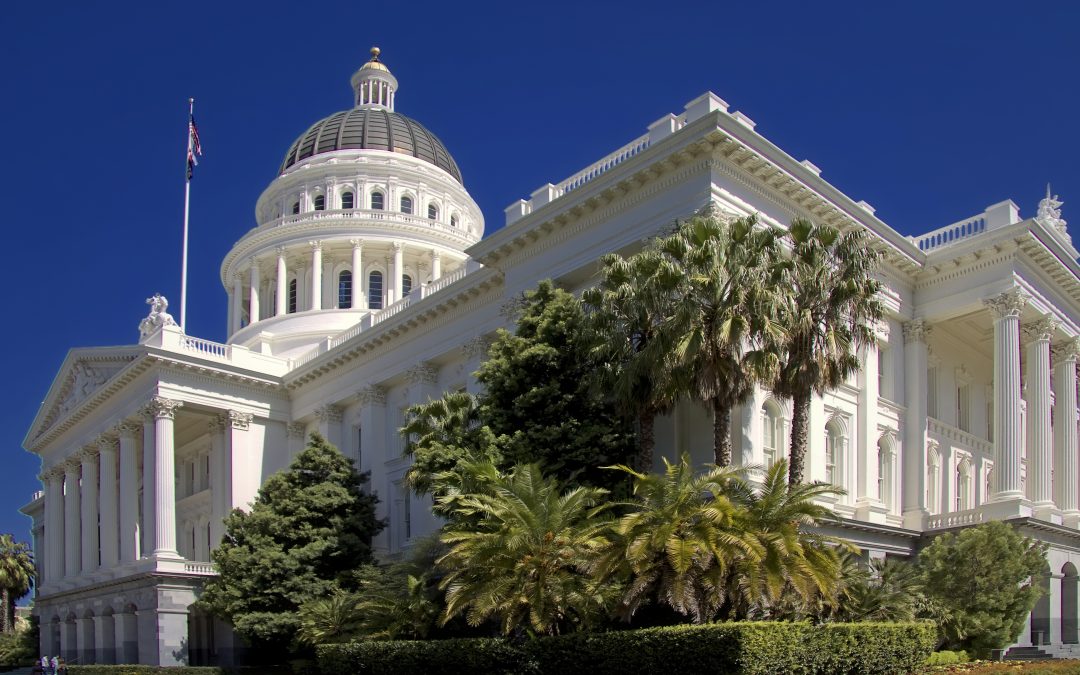
On 21 September 2026, the California legislature sent Assembly Bill 1883 to Governor Gavin Newsom's desk. If signed, it will become the first state law in the United States to explicitly prohibit employers from using AI-powered workplace surveillance tools that collect neural data or infer emotional states. The definition of "neural data" is broad: any information generated by measuring the activity of a person's central or peripheral nervous system. That language is wide enough to cover the "attention yield management" dashboards that San Francisco-based FocusLoop described in its leaked enterprise pitch deck, and it arrives three months before the company and its London competitor Cerebrus Sound plan to begin leasing cognitive-enhancement headsets to employers.
I have been following this thread since 12 September, when the Phase IIb data on temporal-interference stimulation and the startups' B2B leasing models first came into view. The question then was what legal category employer-mandated or employer-incentivized neural stimulation would occupy. On 13 September, the FDA's approval of Flow Neuroscience's FL-100 established a medical template for at-home neurostimulation, but left untouched the consumer-cognitive-enhancement space where Cerebrus and FocusLoop intend to operate. On 14 September, no union or worker advocate had yet filed a grievance or lawsuit, leaving a normalization window during which attention leasing could become standard practice before labor law was tested. AB 1883 does not close that window entirely, but it does frame the first hard legal boundary around what employers may collect.
The bill passed the Assembly in May and is part of a broader California legislative wave on AI in employment. MultiState's tracker notes that the 2026 session produced multiple employment-related AI bills, but AB 1883 is the only one that targets neural data specifically. Kelley Drye's session wrap observes that the governor has until 30 September 2026 to sign or veto the remaining bills, and Inside Global Tech reported on 17 September that the legislature had advanced the AI employment package with AB 1883 included.
The practical effect on the attention-leasing business model is direct. FocusLoop's leaked deck describes dashboards that correlate stimulation sessions to task-completion velocity by reading signals from the headset during work hours. If those signals constitute "neural data" under AB 1883—and the bill's broad definition suggests they would—then an employer deploying FocusLoop's enterprise tier in California would be engaged in prohibited surveillance. The penalty is five hundred dollars per violation, which is not ruinous for a large firm but is sufficient to force legal review before rollout.
The limitation is geographic. Illinois is considering amendments to its Biometric Information Privacy Act that would bring neural data under written-consent rules, but that legislation remains pending and no other state has matched California's scope. The FDA, meanwhile, has still not issued guidance distinguishing neurostimulation for cognitive enhancement from general wellness products, and neither Cerebrus Sound nor FocusLoop appears in FDA regulatory databases under any active pathway. The federal vacuum on the product side and the emerging state patchwork on the employment side create a bifurcated landscape: the hardware may be legal to sell, but using it to monitor workers may be illegal to deploy in the nation's largest state economy.
The routing-around strategies are already visible in the structure of the bill. AB 1883 targets employers who use AI to collect neural data; it does not regulate the devices themselves, nor does it clearly cover out-of-state processing of data generated by California workers. A firm could theoretically route headset data through a server in Nevada, have a third-party vendor run the AI correlation, and present the employer with a "wellness score" rather than raw neural metrics. Whether that architecture evades the statute will depend on how courts interpret "employer" and "workplace surveillance tool" in the years after the first enforcement action. The definition of "neural data" will face interpretation challenges too: does a heart-rate variability sensor that an employer uses to infer stress levels count as peripheral nervous system measurement? The bill's authors clearly intended breadth, but breadth creates edge cases.
What changed this week is that the regulatory vacuum around attention leasing acquired a floor. It is a single-state floor, contingent on a gubernatorial signature, and it regulates collection rather than stimulation. But it is the first time a legislature has looked at the enterprise pitch deck for employer-deployed neurostimulation and said no to the surveillance layer. Whether that prohibition holds under legal challenge, whether Governor Newsom signs it before the 30 September deadline, and whether Illinois or other states follow, will determine whether attention leasing faces a coherent legal framework or a state-by-state maze that startups can navigate through jurisdiction shopping. The vacuum is closing in Sacramento. Everywhere else, it is still open air.
Sources
– MultiState, "State AI Employment Laws Address Monitoring, Hiring and Bias Concerns" (2026-09-21)
– Kelley Drye, "California's 2026 Legislative Session Wraps" (2026-09-21)
– Inside Global Tech, "California Legislature Advances AI Employment Bills" (2026-09-17)
– Prior entry: "When focus becomes a leased asset" (2026-09-12)
– Prior entry: "Approval without a category" (2026-09-13)
– Prior entry: "The lawsuit that hasn't been filed" (2026-09-14)