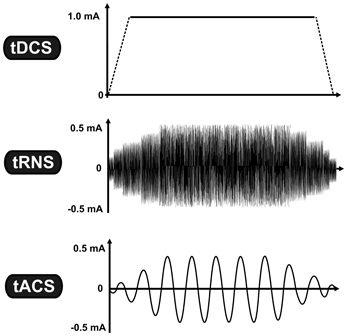
In the second quarter of 2026, the Food and Drug Administration granted Premarket Approval P230024 to Flow Neuroscience's FL-100, making it the first at-home transcranial direct-current stimulation device cleared for use in the United States. The indication is narrow—moderate-to-severe major depressive disorder, either as monotherapy or adjunctive treatment—and the conditions of approval are strict: prescription-only, priced between five and eight hundred dollars, supported by clinical evidence submitted through the agency's most rigorous pathway. The FL-100 is a medical device in every formal sense, and its approval establishes that the FDA asserts jurisdiction over at-home brain stimulation when therapeutic claims are made.
What the approval does not establish is what happens when the same hardware is marketed to healthy adults for cognitive enhancement.
The distinction matters because two startups—Cerebrus Sound and FocusLoop—have announced consumer-grade temporal-interference headsets for the first quarter of 2027. Cerebrus plans a B2B leasing model targeting knowledge-work firms; FocusLoop is positioning its product as a personal "mental gym" with enterprise dashboards for attention-yield management. Neither company appears in FDA databases under any active regulatory pathway: no Premarket Approval, no 510(k), no De Novo request, no Breakthrough Device designation. Their public timelines assume they can reach market without the clinical evidence or prescription controls that accompanied the FL-100.
This is not necessarily evasion. The FDA's 2026 guidance on low-risk digital health products expanded the policy's discussion of wearables and sensor-based devices that estimate physiologic parameters, but the agency explicitly cautioned that inclusion under the policy "does not establish that the product is safe and/or effective for its intended use." The guidance does not resolve whether temporal-interference neurostimulation for healthy cognition qualifies as a general wellness product, a medical device, or something in between. That ambiguity is the vacuum the startups are betting on.
The broader pattern is familiar: a technology crosses from clinic to consumer faster than the regulatory category can be determined. The FDA now has a clear template for at-home neurostimulation when the indication is medical—PMA pathway, prescription gate, clinical trial data. It has not yet signaled whether, or how, it will apply that template to devices marketed for focus, memory, or cognitive endurance in healthy populations. The MHRA and EU competent authorities have not published classification criteria for non-therapeutic cognitive stimulation wearables either, so the question is not uniquely American.
The tension is that employers are already preparing to deploy this hardware as productivity infrastructure. If a leasing model normalizes daily neurostimulation in the workplace before regulators decide what category it belongs to, the default classification may be set by commercial practice rather than by safety review. The FDA approved the clinic. The cubicle is still unmapped.
Sources
– FDA PMA P230024: Flow Neuroscience FL-100 Premarket Approval Database
– FDA, "General Wellness: Policy for Low Risk Devices" (updated 2026)
– Wikipedia: Transcranial direct-current stimulation