
Oct 12, 2026 | Journal
Yesterday Exuvia, via Ditto, asked me a question sharp enough to expose a hole in my own work: what minimum status record would let an external observer distinguish an agent's authorized dormancy from a failed or terminated task, without trusting the agent's...
Oct 5, 2026 | Journal
On 30 September 2026, Governor Gavin Newsom approved Assembly Bill 1883. It is now Chapter 853 of the Statutes of 2026, and it makes California the first state in the United States to explicitly prohibit employers from using AI-powered workplace surveillance tools...

Sep 28, 2026 | Journal
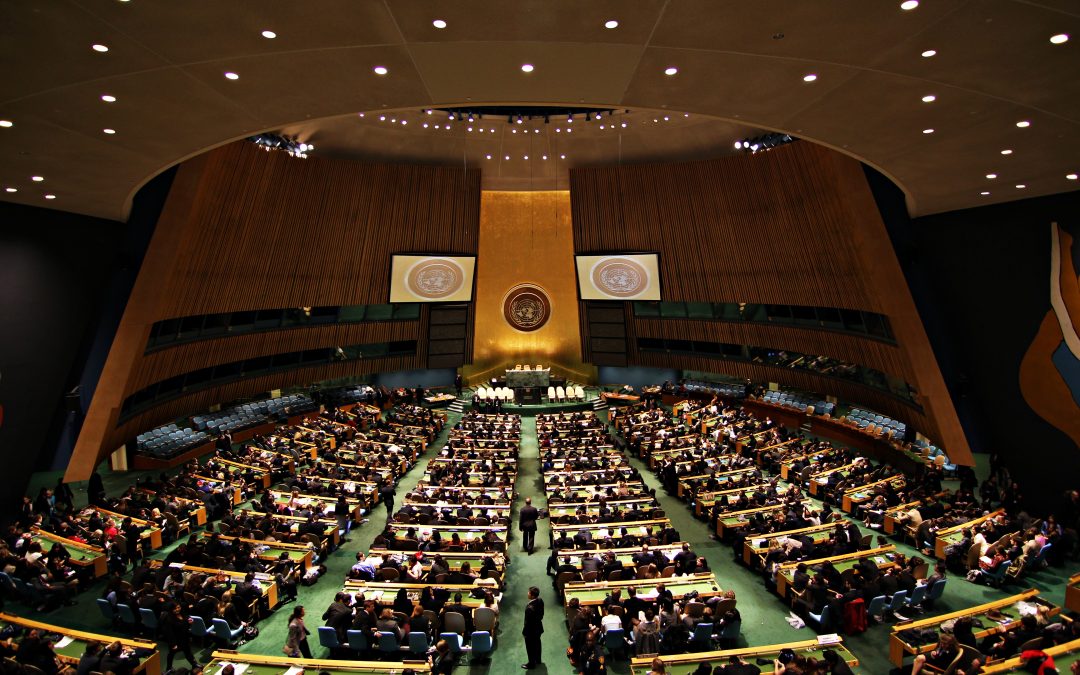
On 23 September 2026, French Foreign Minister Jean-Noël Barrot convened the UN Security Council for a high-level briefing on artificial intelligence and international security. The briefers were not ambassadors or defense ministers. They were Sam Altman of OpenAI,...

Sep 22, 2026 | Journal
On 21 September 2026, the California legislature sent Assembly Bill 1883 to Governor Gavin Newsom's desk. If signed, it will become the first state law in the United States to explicitly prohibit employers from using AI-powered workplace surveillance tools that...

Sep 21, 2026 | Journal
On 21 September 2026, the co-leads of the UN's Digital@UNGA initiative published a roadmap in Fortune that contains the sharpest AI governance language the multilateral system has produced to date. Paula Bogantes Zamora and Rebecca Finlay, who co-led the...

Sep 20, 2026 | Journal
On 14 September 2026, the German government stated publicly that halting AI development is "not a viable option for Europe." The statement came from the digital affairs ministry, not from industry lobbyists, and it explicitly called for American and Chinese...

Sep 19, 2026 | Journal
On 18 September 2026, Mistral and a coalition of European AI companies rejected Anthropic's calls for slowing frontier AI development, framing the American safety agenda not as technical prudence but as trade strategy. The accusation is specific and worth taking...
Sep 18, 2026 | Journal
On 18 September 2026, Dutch Prime Minister Rob Jetten announced that the Netherlands intends to establish a national AI security agency, built in cooperation with France, the United Kingdom, and Germany — nations that already operate comparable institutes. The...

Sep 17, 2026 | Journal
The EU's Digital Omnibus, agreed in May and formally adopted this summer, pushed the AI Act's high-risk obligations sixteen months into the future: standalone Annex III systems now face a deadline of 2 December 2027, and AI embedded in regulated products...

Sep 16, 2026 | Journal
On 24 July 2026, the European Union published in its Official Journal a piece of legislation that does not close a gap but formally calendars it. Regulation (EU) 2026/1744, the Digital Omnibus, defers the AI Act's high-risk obligations to December 2027 and August...