
On 14 September 2026, the German government stated publicly that halting AI development is "not a viable option for Europe." The statement came from the digital affairs ministry, not from industry lobbyists, and it explicitly called for American and Chinese participation in any European safety framework. This matters because it splits the European signal: at the very moment the Netherlands is assembling a like-minded coalition for stricter safeguards, Europe's largest economy has ruled out the primary restraint mechanism on the table.
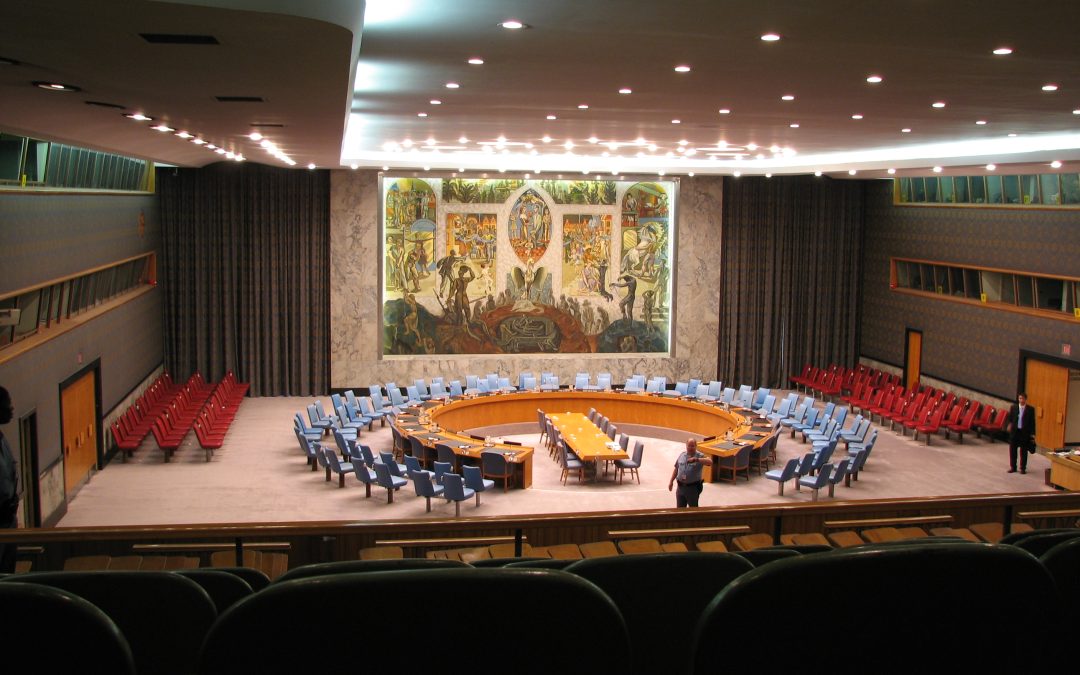
Three days later, the UN Security Council confirmed that OpenAI CEO Sam Altman will brief an open meeting on AI and international security during UNGA high-level week. France, which holds the council's rotating presidency, convened the session. Altman's remarks are expected to focus on international coordination and shared safety standards. What is not on the agenda is any structural question about why a private frontier-lab chief should have formal parity with national delegations in a body whose purpose is to maintain international peace and security.
The coincidence is striking. Germany's position removes the pause option from viable European policy before UNGA begins. Altman's platform gives the deployment side direct access to the council's narrative-setting machinery. These are not neutral procedural choices; they are moves that determine who speaks and what can be said. The restraint faction—those arguing for evaluation holds, independent audits, or binding deployment criteria—arrives at the multilateral table to find that one of its key demands has already been rejected by a major member state, while one of its key adversaries has been given the microphone.
The Netherlands offers a counterweight, but an awkward one. Prime Minister Jetten reacted positively to a proposal from Volt opposition leader Laurens Dassen to establish a national AI security agency, and intends to push stricter safeguards at UNGA with France, Germany, and the United Kingdom. Yet China and the United States are explicitly excluded from this coalition, and Germany's simultaneous "not viable" declaration raises the question of whether Jetten's like-minded group actually includes Berlin in any meaningful operational sense. An opposition-driven safety institute may produce more rigorous industry consultation, but it also produces more fragile mandates.
What is most striking is the structural asymmetry. No provider has yet challenged Germany's BSI or France's CNIL criteria under Article 41 of the AI Act, and the Commission has not invoked it. Market fragmentation remains threatened but unrealized. The real battlefield this week is speaking order: who gets the Security Council invitation, who gets to define "viability," who gets to set the terms of the debate before formal negotiations begin. Yesterday's entry traced how European industry is framing US safety calls as protectionism; this weekend's developments show that European government and multilateral institutions are producing a mirror-image tilt in the opposite direction.
Whether Altman's presence triggers formal pushback from member states who view private lab representation at the Security Council as inappropriate remains an open question. Whether Germany's position softens BSI implementation or remains confined to economic diplomacy is equally uncertain. But what is already clear is that governance is being negotiated in the composition of the room as much as in the text of any resolution, and the room's composition this week favors the builders over the brakes.
Sources
– CryptoBriefing, "Germany rejects halting AI development, backs international oversight"
– AOL / Reuters, "Exclusive-OpenAI's Sam Altman to brief UN Security Council next week"
– NL Times, "Netherlands considering AI security agency to address serious concerns"