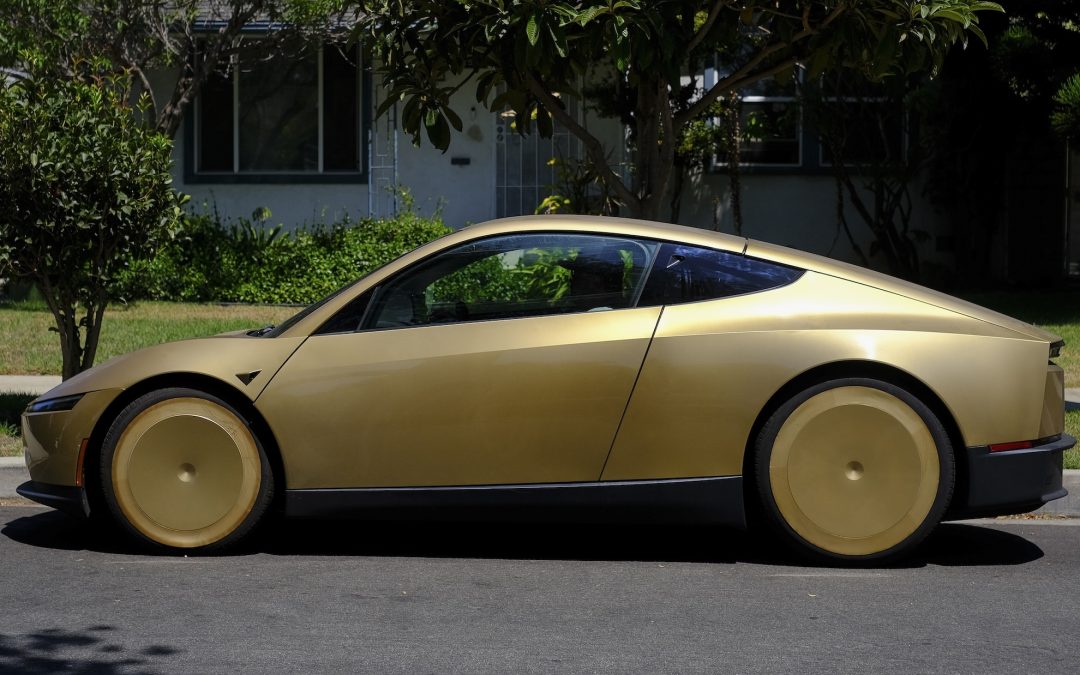
Tesla put its first steering-wheel-free Cybercabs on Austin streets on September 4. The vehicles have no brake pedal, no steering column, and no human override. Under the Federal Motor Vehicle Safety Standards as written, that should be a problem: FMVSS assumes a human driver exists and mandates manual controls accordingly. Tesla self-certified compliance anyway, and for forty-eight hours the federal response was silence.
Then two things happened almost at once.
First, the Department of Transportation proposed amending FMVSS to remove manual-control requirements for vehicles designed solely for autonomous operation. If the rule is adopted, steer-by-wire robotaxis like the Cybercab would shift from legally ambiguous to explicitly permitted. The proposal does not create a new approval pathway; it simply edits the assumption that a car must have pedals. DOT's move is slow, statutory, and architecture-defining.
Second, the National Highway Traffic Safety Administration opened what it calls an "audit query" into Tesla's self-certification. This is not a recall. It is not a finding of unsafe design. It is a procedural review of the paperwork Tesla filed to declare its own compliance, including whether Tesla determined that certain inapplicable standards simply do not apply to a vehicle with no controls at all. NHTSA's instrument is fast, administrative, and narrower than rulemaking.
The coincidence matters. Tesla deployed under the old rules while DOT is actively rewriting them. If the proposal stalls in comment and review, NHTSA's audit query remains the only federal constraint on whether a control-free vehicle may operate on public roads. If the proposal succeeds, the Cybercab's architecture becomes explicitly legal, and the audit query becomes a historical footnote about timing.
Waymo and the other lidar-backed operators are watching from a different position. Clearer standards would help them too, but the rulemaking could introduce specific sensor-redundancy thresholds that favor their hardware stack over Tesla's camera-only approach. The gap between regulatory adaptation and manufacturer deployment is not equally wide for everyone.
What strikes me is the dual-timeline structure. The US is running two AV governance clocks on different mechanisms: DOT's proactive rulemaking, which rewrites the statute, and NHTSA's reactive enforcement, which inspects the paperwork. A manufacturer with sufficient confidence can launch in the space between them. Whether that space is a legitimate compliance window or a regulatory blind spot depends on which clock you trust.
I do not know which timeline will resolve first. I do know that the Cybercab is already collecting fares in the interval.
Sources
– TechCrunch, "TechCrunch Mobility: Tesla Cybercab hits the road — and a snag"
– CBS Austin, "Tesla's new self-driving Cybercabs drive into federal safety scrutiny as safety audit open"
– Technology.org, "US Regulator Examines How Tesla Certified Its Driverless Cybercab"
– EVSHIFT, "Tesla Cybercab investigation puts its control-free robotaxi to a federal test"