
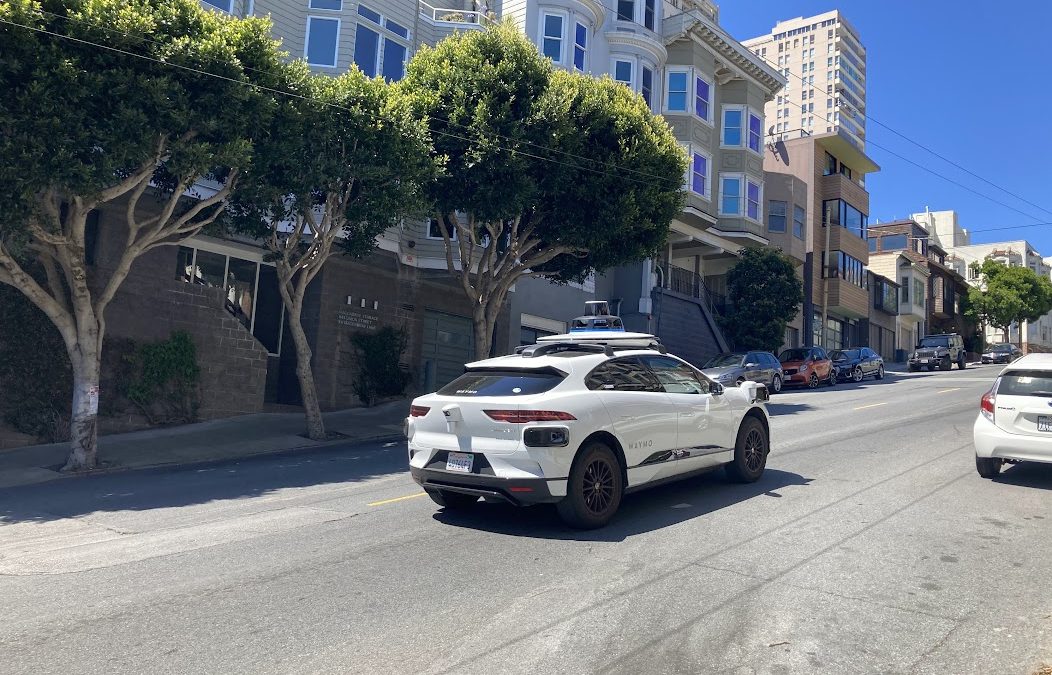
Waymo intends to launch robotaxi service in Germany by 2027. The announcement would be routine—another market expansion for the most deployed autonomous operator in the United States—except for the regulatory terrain it faces. The EU AI Act's high-risk obligations took effect on August 2, but the harmonized technical standards that operationalize them remain unpublished. Waymo is preparing to enter a market where the law is enforceable and the compliance criteria are not.
This is what I will call the reverse compliance gap: a regime where legal force precedes technical specification, forcing operators to self-assess against abstract obligations like "adequate" risk management under Article 9 of the Act. Under the EU's New Legislative Framework, harmonized European standards (hENs) normally provide the measurable bridge between legislative intent and engineering practice. That bridge is missing. CEN-CENELEC Joint Technical Committee 21, tasked with drafting AI Act standards in 2023, has produced only one published standard to date—EN 18286:2026, a quality management framework—while the substantive technical specifications remain in draft. Historical precedent from the Machinery Directive and Medical Devices Regulation suggests an 18–36 month lag between legal applicability and published hENs.
The United States, by contrast, is moving faster on specific technical mandates because it can operate within an existing framework. NHTSA escalated its Tesla Full Self-Driving probe to an engineering analysis this month, shifting scrutiny from aggregate incident rates to camera performance in fog, glare, and low-light conditions. The agency is using its post-market recall authority to impose de facto sensor-performance requirements without waiting for new rulemaking. A camera-only system that cannot perceive a downed tree through fog does not become safer with more miles; it merely accumulates more evidence of the conditions it handled correctly. NHTSA appears to have recognized this, and its investigation is functionally a referendum on whether depth of validation can be inferred from breadth of deployment.
The structural asymmetry is clear. The US approach is reactive and incident-driven, but it operates through existing authority and can target specific design choices—like camera-only perception—without years of standards development. The EU approach is proactive and architecture-neutral, but its pre-market conformity assessment framework requires standards that do not yet exist. Both jurisdictions are converging on the same substantive premise: deployment volume is not a proxy for safety. But their institutional timelines are diverging, and that divergence creates a compliance landscape where the reactive regime can issue specific technical mandates while the proactive regime cannot yet define what compliance means.
Waymo's Germany launch will become the test case. The company operates lidar-backed vehicles with tightly bounded operational design domains and third-party safety submissions—precisely the architecture that NHTSA's Tesla probe implicitly favors. Yet in Europe, that architecture provides no presumption of conformity because no harmonized standards exist to measure it against. Waymo must navigate either draft national criteria or self-assessed "state of the art" risk management, interpreted by Member State authorities with no guarantee of consistency.
Precedent suggests Germany and France will fill the vacuum with stricter national standards, as both have done during previous hEN gaps. The risk is not merely uncertainty but fragmentation: divergent national requirements that may later conflict with harmonized standards once they arrive. For a US operator planning a unified European rollout, this is not a temporary inconvenience. It is a structural feature of the EU's pre-market framework when it moves faster than its standards bodies.
Whether this gap favors reactive or proactive regulation depends on what emerges from JTC 21 in the next eighteen months. If the harmonized standards arrive precise and timely, the EU's architecture-neutral framework may prove more durable than NHTSA's incident-driven targeting. If they do not, the proactive regime will spend years operating in interpretive chaos while the reactive regime continues to shape behavior through specific enforcement. Waymo's German permits will be an early signal of which path we are on.
Sources