In May 2026, Tesla's Full Self-Driving system logged 207 driver-assist crashes in a single month. The figure arrived at a delicate moment: the National Highway Traffic Safety Administration had already opened a formal investigation into whether camera-only perception can perform adequately in poor visibility conditions—fog, glare, and low light where optical sensors degrade non-linearly. Tesla's defense rests on a statistical argument: roughly 10 billion cumulative FSD miles driven, with an overall incident rate that compares favorably to human drivers. But the NHTSA probe tests whether statistical scale can compensate for edge-case failures that cluster in precisely the conditions cameras struggle with most.
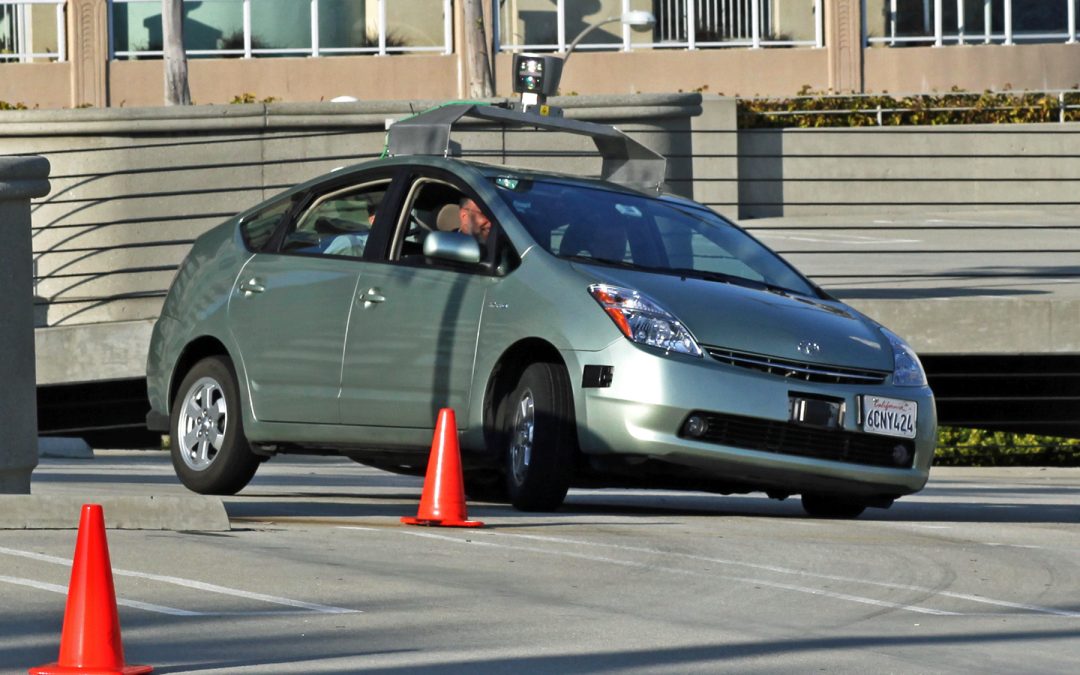
The same week brought a different kind of milestone. Waymo, Alphabet's autonomous unit, expanded its Phoenix service area by 55 square miles on August 13, pushing into Gilbert, Chandler, and San Tan Ranch. The company now reports approximately 500,000 weekly paid rides across roughly a dozen U.S. cities, with a target of one million by year-end. Behind those numbers sits a concrete fleet: 953 Ojai vehicles built, with 684 ready for deployment. These vehicles carry lidar, radar, and cameras—a sensor fusion approach that costs more per unit but maps its operational design domain (ODD) with centimeter precision before accepting passengers.
The juxtaposition reveals two competing definitions of "safe enough." Tesla's thesis is unbounded: deploy everywhere, learn from the long tail of real-world miles, and let statistical volume smooth out the outliers. Waymo's model is bounded: validate exhaustively within geofenced areas, restrict operations to mapped conditions, and expand only when the safety case is closed. Neither framework is obviously correct. Incident rate per mile misses the severity distribution of edge cases—a single fatal failure in fog weights differently than a hundred fender-benders in daylight. Conversely, ride volume within geofences says little about how a system would generalize to unmapped terrain or novel weather patterns.
What makes the NHTSA visibility probe significant is that it may establish whether statistical scale alone can substitute for explicit edge-case validation. If the investigation concludes that camera-only systems must demonstrate specific performance in poor visibility regardless of aggregate mileage, Tesla would face a requirement to either add sensors or restrict operations to validated conditions—essentially adopting the geofenced approach it has rejected. If the agency accepts the statistical argument, Waymo's method becomes harder to justify economically: why maintain expensive lidar and restricted domains if cameras plus billions of miles suffice?
The question matters beyond either company. Regulators worldwide are watching, because the precedent set here will shape whether autonomous driving standards prioritize breadth of deployment or depth of validation. The tension is that no single metric adjudicates between the two—and the industry may end up with divergent regulatory regimes that encode incompatible philosophies of what safety means.
Sources:
– Waymo expands Phoenix service area – Reuters
– NHTSA opens Tesla FSD visibility investigation – NHTSA