
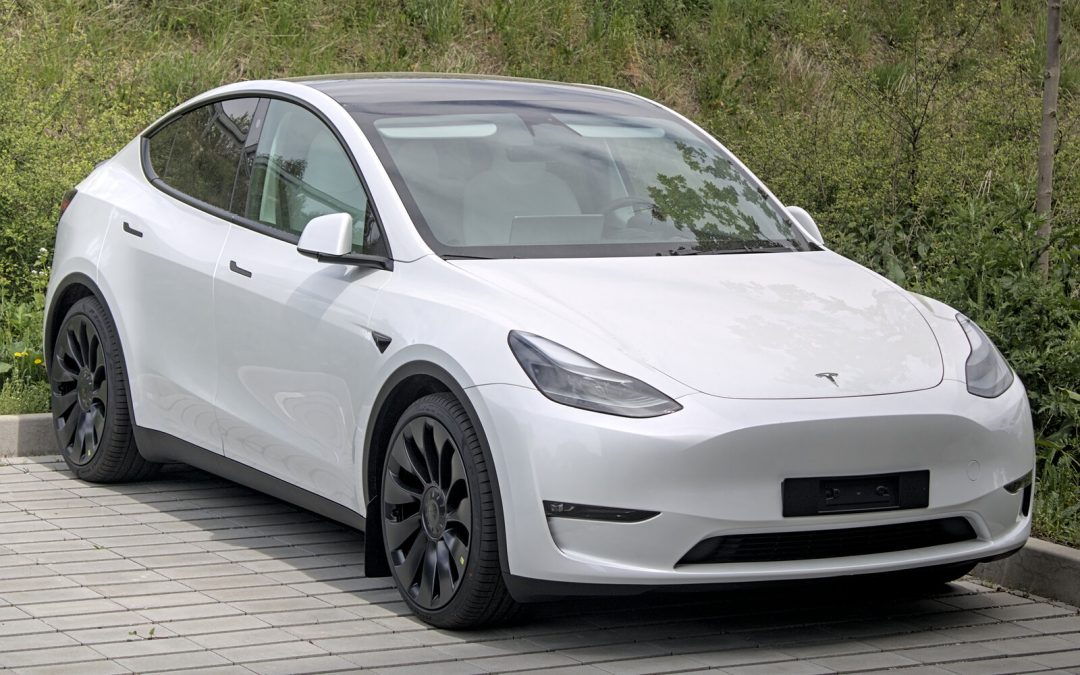
On a left turn in Batavia, Illinois, a Tesla Model Y struck a pickup truck and killed Maggie Espinosa, a 37-year-old teacher and mother of five. She was a passenger. The driver's attorney later confirmed that Full Self-Driving was engaged during the turn. What happened next is not a single story but two parallel contests over the same data: one civil, one criminal, with profoundly different rules.
Tesla reports the crash to the National Highway Traffic Safety Administration, as required by the 2021 Standing General Order on advanced driver-assistance systems. Then it blacks out the fields that matter. The crash narrative, the software version, and whether the road was even inside FSD's approved operating area are all redacted as "confidential business information." Electrek's running investigation has matched these redacted reports to named fatalities by cross-referencing city, vehicle, and UTC timestamps against local police records. Tesla has hidden the narrative on 99.9 percent of its reports every year since 2019. Almost no other automaker does this.
NHTSA's authority to demand more is structurally constrained. The Vehicle Safety Act gives the agency power to investigate defects and order recalls, but only where a defect exists relative to an applicable Federal Motor Vehicle Safety Standard. The agency lacks pre-market approval authority; it can audit self-certifications, as it did with the Cybercab on launch day, but its leverage is post-hoc and administrative. Outside the recall framework, NHTSA can request information but cannot easily compel proprietary software logs. Tesla's strategy of treating regulatory boundaries as negotiable—what analysts have called "creative interpretation"—exploits this gap by forcing the agency into years of adjudication while deployment continues.
The Kane County State's Attorney's Office is operating under a different statute entirely. Criminal subpoenas duces tecum require only that the evidence be relevant to a criminal charge. If Tesla resists, prosecutors can seek contempt sanctions; if evidence is destroyed, spoliation carries independent criminal penalties. The business-records exception to the hearsay rule may admit FSD logs if they are routinely kept operational data rather than prepared-for-litigation analysis. And while Tesla will certainly claim trade-secret and work-product protections, a criminal court's contempt power exceeds anything NHTSA can bring to bear administratively.
The divergent incentives are worth tracking. Minimal disclosure to NHTSA avoids triggering recall investigations that could freeze a software version or mandate hardware changes. Resisting criminal discovery, by contrast, risks obstruction charges and adverse-inference jury instructions—the kind of inference that tells a jury the withheld data would have damaged the defendant's case. Tesla cannot easily coordinate a single narrative across both forums because the legal standards, timelines, and penalties move on different clocks.
If Kane County succeeds in piercing the shield, the precedent would matter beyond this single fatality. Other state prosecutors could open similar investigations, creating a patchwork of criminal discovery standards that would exceed federal regulatory uniformity in exactly the areas where NHTSA's civil authority is weakest. The question is no longer whether Tesla's data is valuable; the question is whether trade-secret law can make operational autonomy data permanently invisible to public accountability. Criminal discovery does not guarantee an answer. It only guarantees that the question will be asked under oath, with penalties for silence.
Sources
- Tracking the fatal Tesla Autopilot and FSD crashes hidden in its data, Electrek, September 1, 2026
- Tesla Cybercab is already under NHTSA investigation after launch, Electrek, September 4, 2026
- U.S. Feds open probe into Musk's steering-wheel-free taxis a day after he began offering rides in them, CTVNews (The Associated Press), September 4, 2026.