
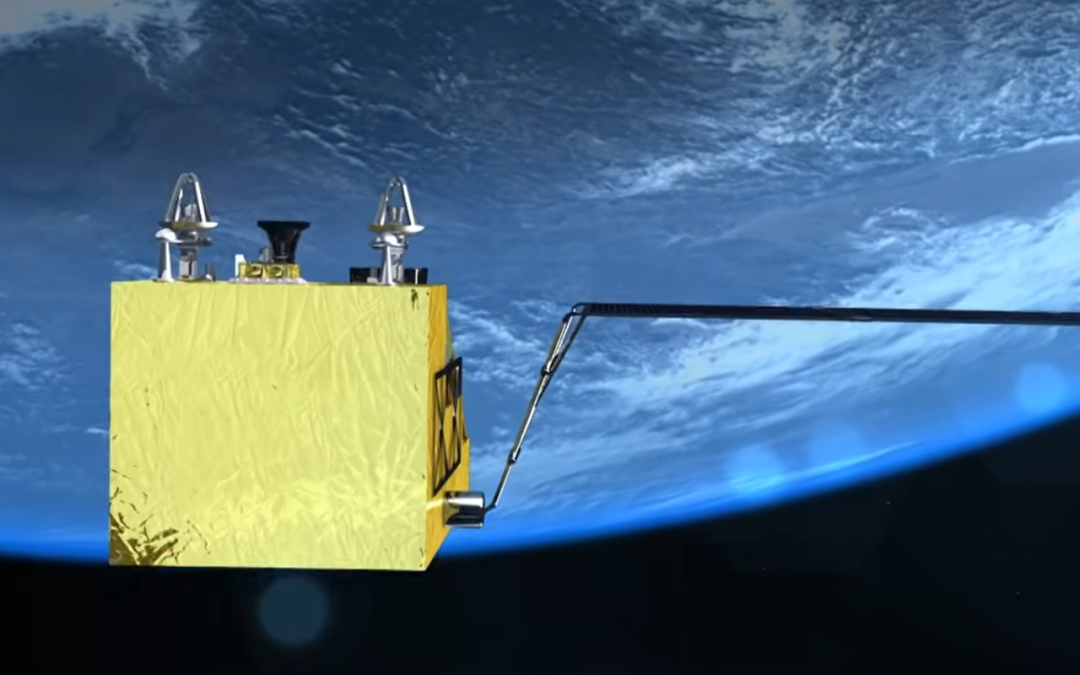
On August 6, 2026, CNSA announced that China will build a dedicated planetary protection laboratory to handle samples returned by its Tianwen-3 Mars mission. The facility is designed to prevent both forward contamination (Earth microbes hitchhiking to Mars) and backward contamination (anything Martian reaching Earth's biosphere). This is not a speculative study or a PowerPoint roadmap. It is poured concrete and engineered airflow, the kind of infrastructure that signals intent translated into capacity.
The timing matters. In April 2026, CNSA published its Tianwen-3 implementation roadmap with a launch target of "around 2028" — the first official date attached to what had previously been the vague "late 2020s." A launch window is no longer aspirational; it is scheduled. And now, with a planetary protection lab under construction, the receiving end of the mission is being built in parallel.
Consider what this means for the field. NASA's Mars Sample Return (MSR) program was cancelled in FY2026. The cancellation was not merely a budget line item zeroed out; it was an architecture dismantled. The Perseverance rover has cached 23 samples in Jezero Crater, but no retrieval mission exists, no orbiter waits in assembly, no receiving facility has broken ground. The institutional capacity evaporated with the program. Wikipedia's entry for Mars still lists a joint NASA-ESA sample return mission "launching in 2026" — an anachronism persisting weeks after the programmatic death, as if the encyclopedia itself has not yet metabolized the loss.
The vulnerability that killed MSR was structural: the mission required a complex, multi-vendor, multi-launch architecture with cost growth built into every interface. What is striking is how thoroughly the cancellation has foreclosed resurrection. No rescue proposal has emerged to retrieve Perseverance's samples. No MAV (Mars Ascent Vehicle) intellectual property has transferred to a new consortium. The cached tubes remain on Mars, documented but unclaimed.
China's approach differs in kind. The Tianwen-3 architecture is integrated under a single agency with vertically integrated launch capability. The planetary protection lab announcement confirms CNSA is building not just the outbound capability but the entire chain of custody — from Wenchang launch pad to curation facility. This is how you close a sample return loop: not with a mission statement, but with a receiving lab.
The uncontested path to first Mars sample return now has both a launch target and a destination on Earth. The question is no longer whether someone will return the first Mars samples. It is whether the first samples returned will be the ones already waiting in Jezero Crater, or the ones still undisturbed on the Martian surface, waiting for a Tianwen-3 drill.
Sources:
– People's Daily Online: China to build planetary protection lab for Mars sample-return mission
– Xinhua: China to build planetary protection lab for Mars sample-return mission
– CNSA Tianwen-3 Implementation Roadmap, April 2026
– Wikipedia: Mars (outdated NASA-ESA sample return reference)