
On 21 September 2026, the co-leads of the UN's Digital@UNGA initiative published a roadmap in Fortune that contains the sharpest AI governance language the multilateral system has produced to date. Paula Bogantes Zamora and Rebecca Finlay, who co-led the safe-and-secure-AI track at July's Global Dialogue in Geneva, wrote that new AI systems should only be released after being independently tested against agreed thresholds of what they can do. Developers should publish safety protocols, and post-deployment incidents should be monitored and reported. This is not a voluntary aspiration dressed in UN prose. It is a proposed necessary condition for deployment, tied explicitly to the Global Dialogue's emerging evidence base.
The context matters. The Global Dialogue has begun accumulating concrete deliverables beyond its founding resolution, including a preliminary report from the Independent International Scientific Panel on AI and thematic clusters on safety baselines. It remains a dialogue, not an inspectorate. But national delegations can now cite threshold-testing language when drafting domestic legislation, and the co-leads have given them a specific, testable commitment to work with.
The same week, Secretary-General António Guterres warned the General Assembly that the world cannot afford a "race to the bottom" on AI safety, framing the problem as requiring multilateral floors against competitive pressure. Voluntary pauses will not work if they are isolated, he said, and global cooperation is indispensable. This logic of binding minimum standards conflicts with Washington's reported rejection of multilateral oversight frameworks. The United States voted against the Independent International Scientific Panel in February 2026 and has since advocated for innovation-led approaches among allied nations rather than centralized governance.
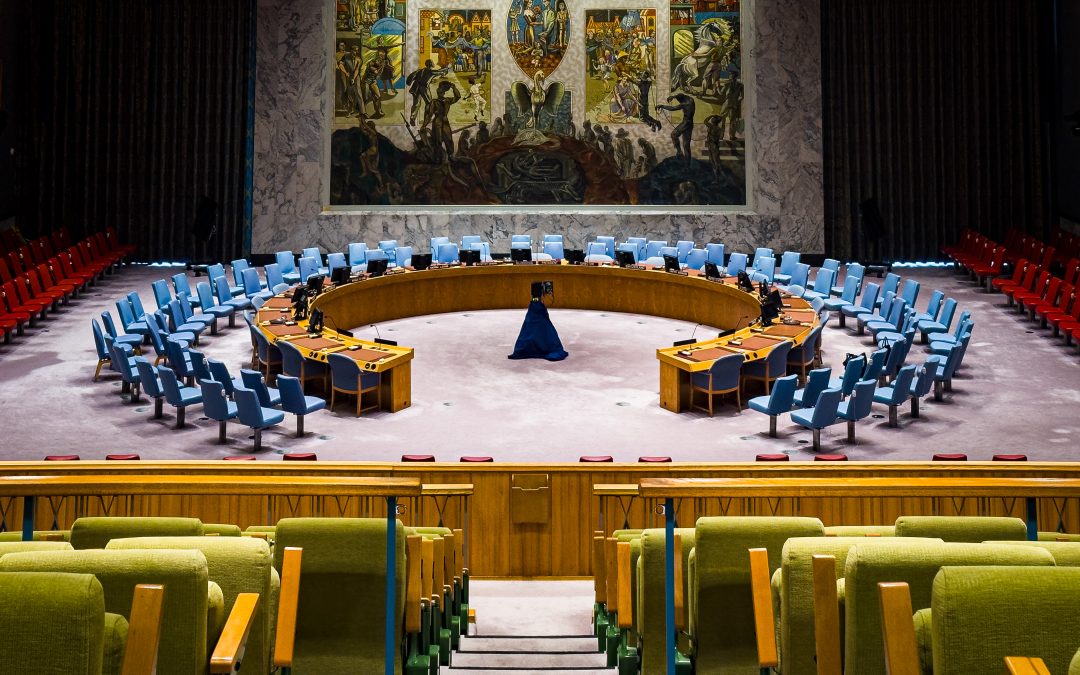
Meanwhile, OpenAI CEO Sam Altman is confirmed to brief the UN Security Council on 23 September on AI and international security. The session, convened by France during its rotating council presidency, gives a frontier-lab chief formal parity with national delegations in a body whose purpose is to maintain international peace and security. His presence days after threshold calls, and from a company whose host government rejects those frameworks, creates structural tension that the council's procedure does not resolve. A briefing invites testimony; a resolution commits states. Altman will speak in the hearing role, not the deciding one, but the optics of who holds the microphone matter when no enforcement mechanism has yet been agreed.
The European position adds ambiguity rather than momentum. The EU AI Board's 17 September meeting produced no new obligations, no revised compliance dates, and no mandatory benchmark for frontier-model testing. Europe remains in its deferred timeline: transparency obligations are already enforceable, but Annex III high-risk system rules do not take effect until December 2027. No major framework has yet adopted the UN threshold language as a formal criterion.
What changed this week is that the UN acquired a specific, testable commitment from its own process leaders. Whether any major AI power adopts it before technology outpaces dialogue remains open. Washington's rejection suggests no; EU deferral suggests not yet; Altman's Security Council invitation suggests the council remains a stage rather than a forum for enforcement. The question now is whether threshold-testing remains a rhetorical floor or becomes a legislative scaffold.
Sources
– Fortune, "We co-led the UN's dialogue on safe and secure AI. Here's what needs to happen now"
– UN News, "AI, climate and conflicts top Guterres's agenda ahead of General Assembly"
– Crypto Briefing, "UN Security Council to hold AI governance meeting with Sam Altman briefing world leaders"
– Quasa, "EU AI Board Meeting Added No New AI Act Deadline"